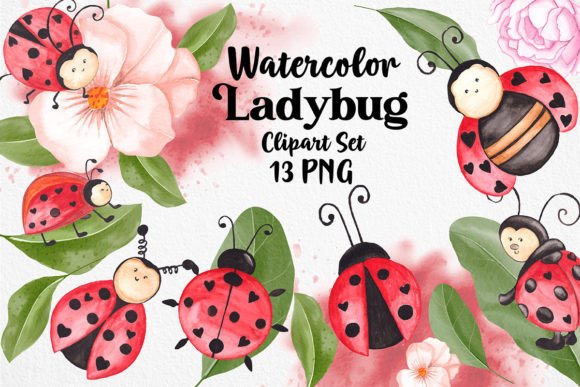
Watercolor Ladybug Clipart Set with Leaf for Branding and Creative Projects
As a graphic designer working frequently with small businesses, handmade brands, and seasonal campaigns, I'm always evaluating design assets that can elevate a visual concept. Recently, I came across the Watercolor Ladybug Clipart Set with Leaf, and I wanted to take a close look at how it might work in a real-world client project. This review dives into the style, usability, and practical application of this illustration set across multiple design contexts.
First Impressions: Soft, Organic, and Whimsical
Opening the Watercolor Ladybug Clipart Set with Leaf, the first thing I noticed was the soft watercolor texture and hand-painted aesthetic. The ladybugs and leaf elements feel organic and slightly imperfect—exactly the kind of charm you'd expect from a handmade brand or seasonal product line. It's not overly polished or digital, which gives it a unique appeal for clients looking to connect with audiences through warmth and personality.
The color palette is gentle, with muted reds, earthy greens, and subtle washes that suggest a natural, botanical theme. This makes the set ideal for branding or marketing visuals that need to feel approachable, nostalgic, or eco-conscious. It's the kind of design asset that works well when you want to evoke a sense of calm and creativity.
Real-World Use: From Branding to Merchandise
I tested the Watercolor Ladybug Clipart Set with Leaf in a few different client scenarios, including a logo design for a local botanical shop, packaging for an organic candle line, and social media graphics for a spring-themed pop-up event. In each case, the illustrations added a touch of handcrafted elegance without overpowering the core design.
- Logo design: Used as a supporting icon in a minimalist logo system, the ladybug graphic added a hint of personality without compromising brand clarity.
- Packaging design: Applied to eco-friendly product labels and tissue paper, the leaf and ladybug motifs reinforced the brand’s natural aesthetic and attention to detail.
- Social media graphics: In Instagram stories and Pinterest pins, the clipart helped create a cohesive visual language that stood out in a sea of digital content.
It also worked surprisingly well in Canva templates and Cricut projects—especially when designing printable wall art or custom stickers for a local artisan shop. The PNG files handled resizing well, and the transparent backgrounds made it easy to layer over textures and patterns.
Where This Clipart Set Shines
The Watercolor Ladybug Clipart Set with Leaf performs best in design environments where a gentle, handcrafted feel is desired. It’s particularly effective in:
- Themed packaging and product mockups
- Seasonal marketing visuals and campaign assets
- Printable designs for Etsy shops and digital sellers
- Decorative accents in editorial and blog layouts
- Sticker and t-shirt design for boutique merchandise
Because of its organic texture and soft lines, it also works well in hero graphics and larger layout areas where the details can be appreciated. I found it especially useful when designing for clients in the wellness, botanical, or children’s markets—where emotional appeal and visual warmth are key.
When to Use with Caution
While the Watercolor Ladybug Clipart Set with Leaf has a lot going for it, there are a few situations where it may not be the best fit:
- Small-scale applications: At very small sizes, the fine details can get lost, making it less effective for tiny icons or mobile app graphics.
- Crowded layouts: When layered over complex backgrounds or alongside many other design elements, the clipart can feel visually overwhelmed.
- Minimalist branding: If the client’s brand leans toward clean, modern aesthetics, this asset may clash with the intended visual tone.
- Corporate or professional materials: While it works beautifully for handmade and creative brands, it might not be suitable for formal business decks, legal documents, or high-end corporate reports.
It’s always important to test the clipart in context—especially if the design needs to maintain strong visual hierarchy and readability across different platforms.
Designer Notes: Practical Considerations Before Use
Before incorporating the Watercolor Ladybug Clipart Set with Leaf into a client project, I recommend running through these checks:
- Test in black and white: See how the design holds up when desaturated—this is especially important for print-on-demand sellers who may offer grayscale versions.
- Check contrast on light and dark backgrounds: Some of the lighter watercolor strokes may not show well on dark or textured backgrounds.
- Preview at multiple sizes: Make sure the clipart remains legible and visually appealing when scaled down for social media avatars or printed on small stickers.
- Inspect file formats: Confirm whether you're getting both PNG and SVG options, especially if you need to edit the illustrations in vector-based programs like Illustrator.
- Verify commercial licensing: Always double-check that the clipart is cleared for commercial use, especially if it’s being used in a product sold on Etsy or in print-on-demand services.
I also tested the clipart with various font pairings—from script fonts for a whimsical look to sans-serif fonts for a more modern twist. It paired especially well with handwritten and display fonts, enhancing the overall creative tone of the design.
Final Thoughts: A Versatile Design Asset for the Right Project
In summary, the Watercolor Ladybug Clipart Set with Leaf is a well-crafted illustration bundle that can add visual charm and emotional resonance to the right kind of project. Whether you're designing for a small business, a seasonal campaign, or a creative marketplace product, this set can help elevate your work with a touch of organic elegance.
As with any graphic design asset, its success depends on context, application, and alignment with the brand’s visual identity. But for designers working in editorial design, product packaging, or digital marketing visuals, this clipart set is definitely worth considering—especially when the goal is to create something that feels authentic, warm, and human-made.